
The complete guide
Choosing Stemless Wine Glasses, A Practical Buyer's Guide
The glassware problem nobody talks about
Most kitchens have a drawer of mismatched glasses. A couple of survivors from a set bought years ago, two from a promotion, one that came free with a bottle. They work, technically. But when you have people over and you put four different glasses on the table, the table never quite looks finished.
The other half of the problem is breakage. Stemmed wine glasses look lovely and they die young. The stem is the weak point, and it goes when someone stacks the dishwasher badly or knocks a glass against the tap. Over a couple of years a set of six becomes a set of three.
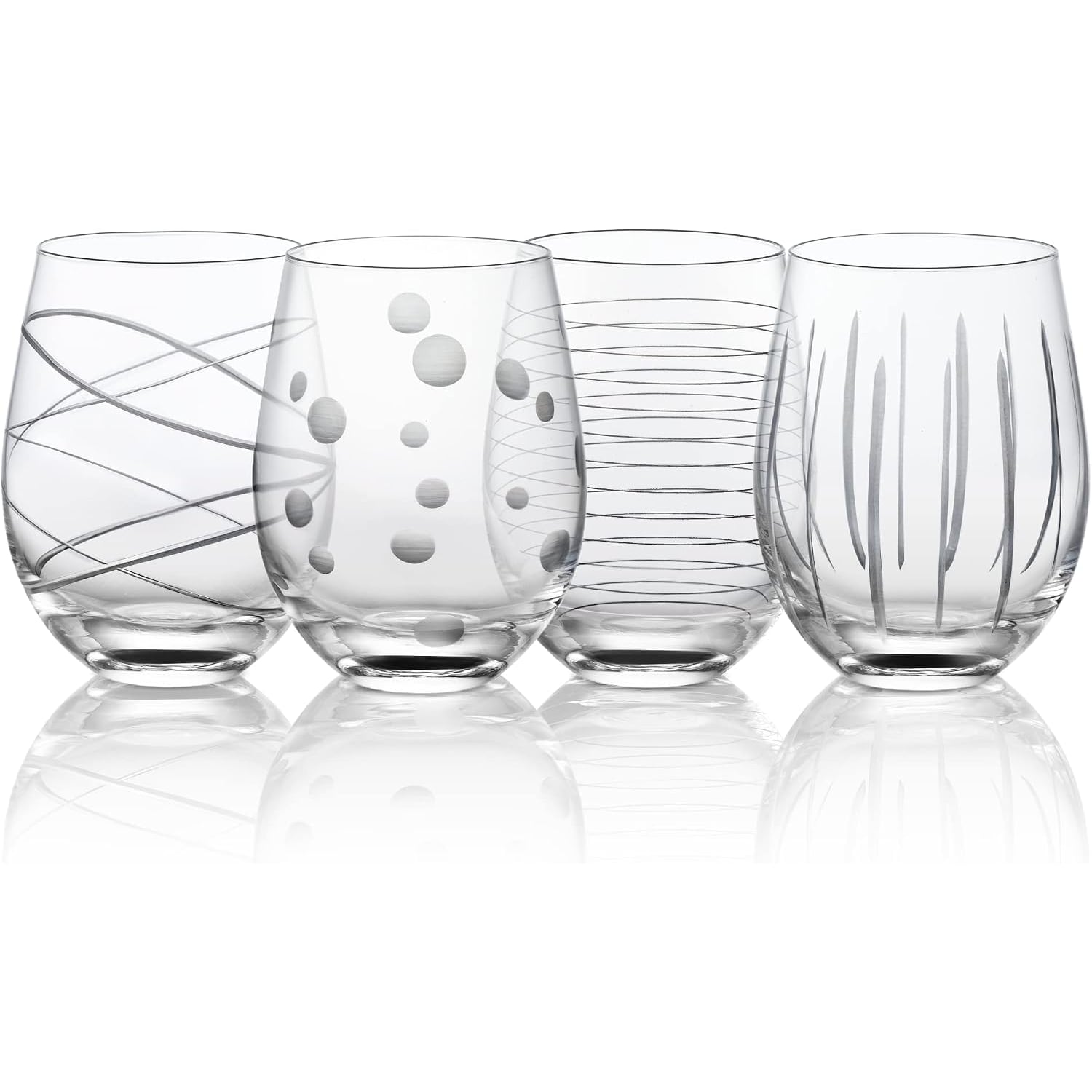
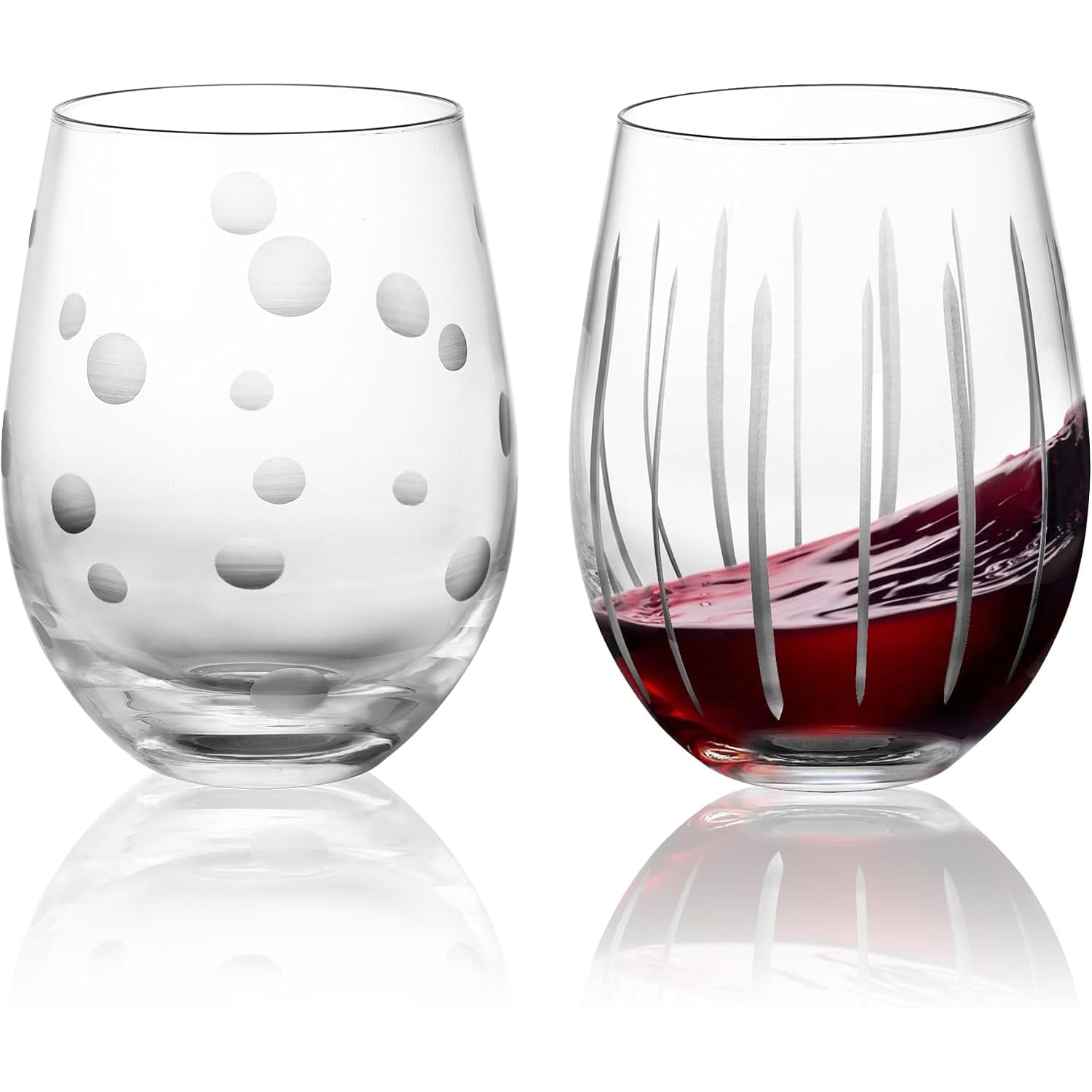
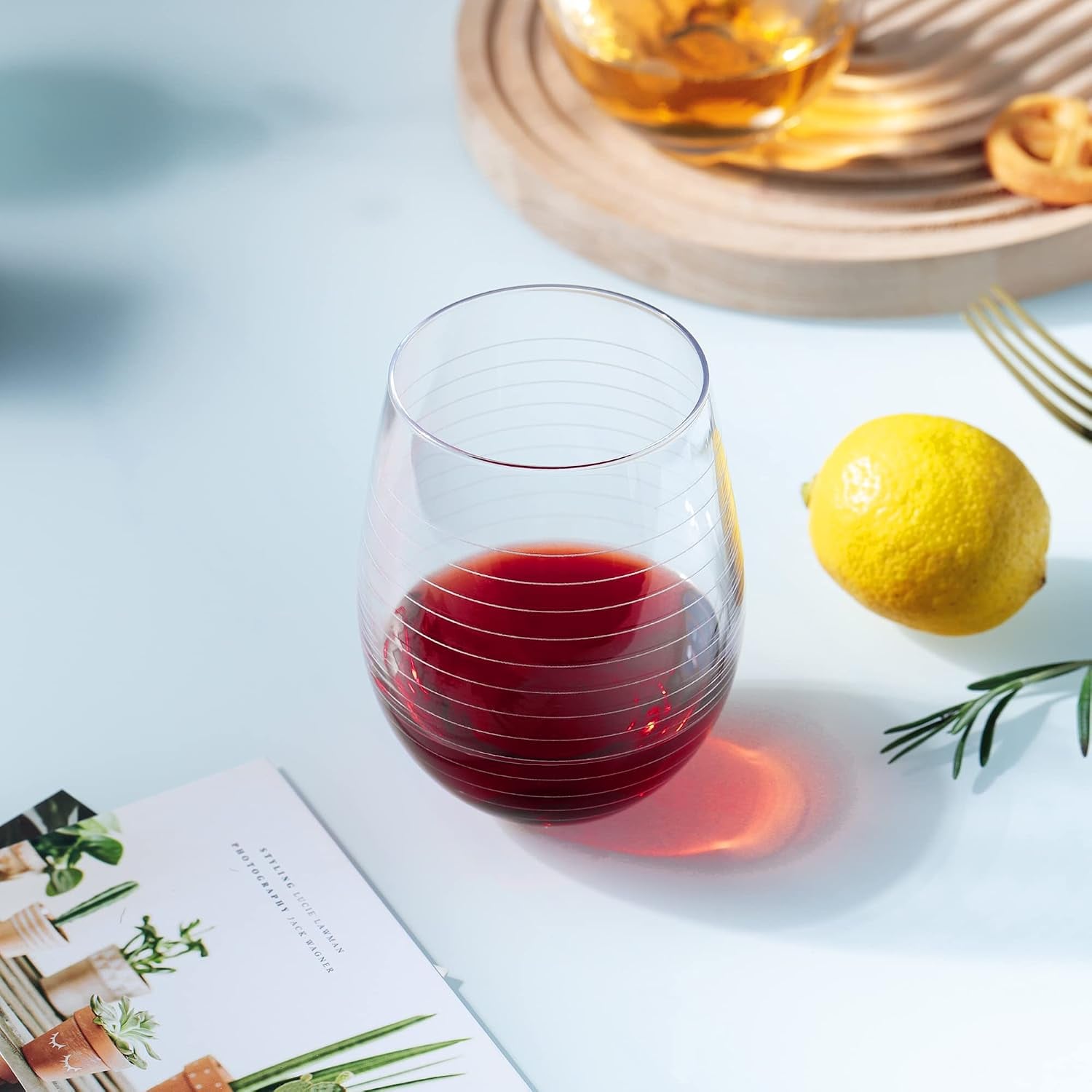
A set of four engraved stemless wine glasses solves both problems at once. You get a matching set that looks intentional, and you remove the single most fragile part of a traditional wine glass. These hold 520 ml each, measure about 7.1 cm across by 11.9 cm tall, and carry an etched pattern of dots, strips and swirls worked into the glass surface.
How stemless glasses actually work
The physics is simple. A stemmed glass puts the weight of the liquid up high on a narrow support. Nudge the base and it tips. A stemless glass keeps all that weight low and sits flat on a wide footprint, so the same nudge just slides it an inch.
That matters more than it sounds. Crowded dinner tables, coffee tables with no space, picnic blankets, garden chairs with arms instead of side tables, all of them are hostile to stemmed glassware. Stemless glasses handle them.
The trade off is temperature. Your hand is warmer than chilled wine, so holding the bowl does transfer heat. If you are drinking a crisp white very slowly on a warm afternoon, a stemmed glass will keep it cooler for longer. For most real drinking, where a glass lasts twenty minutes rather than two hours, it is not something you notice. Chilling the glasses in the fridge before serving closes most of the gap anyway.
The etching is the other working part. A printed design sits on top of the glass and eventually fades, chips or peels. Etched detail is cut into the surface, so washing does not lift it. Run a finger over the pattern and you can feel the texture, which is also what makes the glass easier to grip when your hands are damp.
Who these suit
They suit people who entertain in small numbers. Four is the number that covers a couple plus two guests, or a family dinner, and that is the shape of most home hosting.
They suit anyone who hates fragile things. If you have broken more stems than you care to count, going stemless stops the cycle.
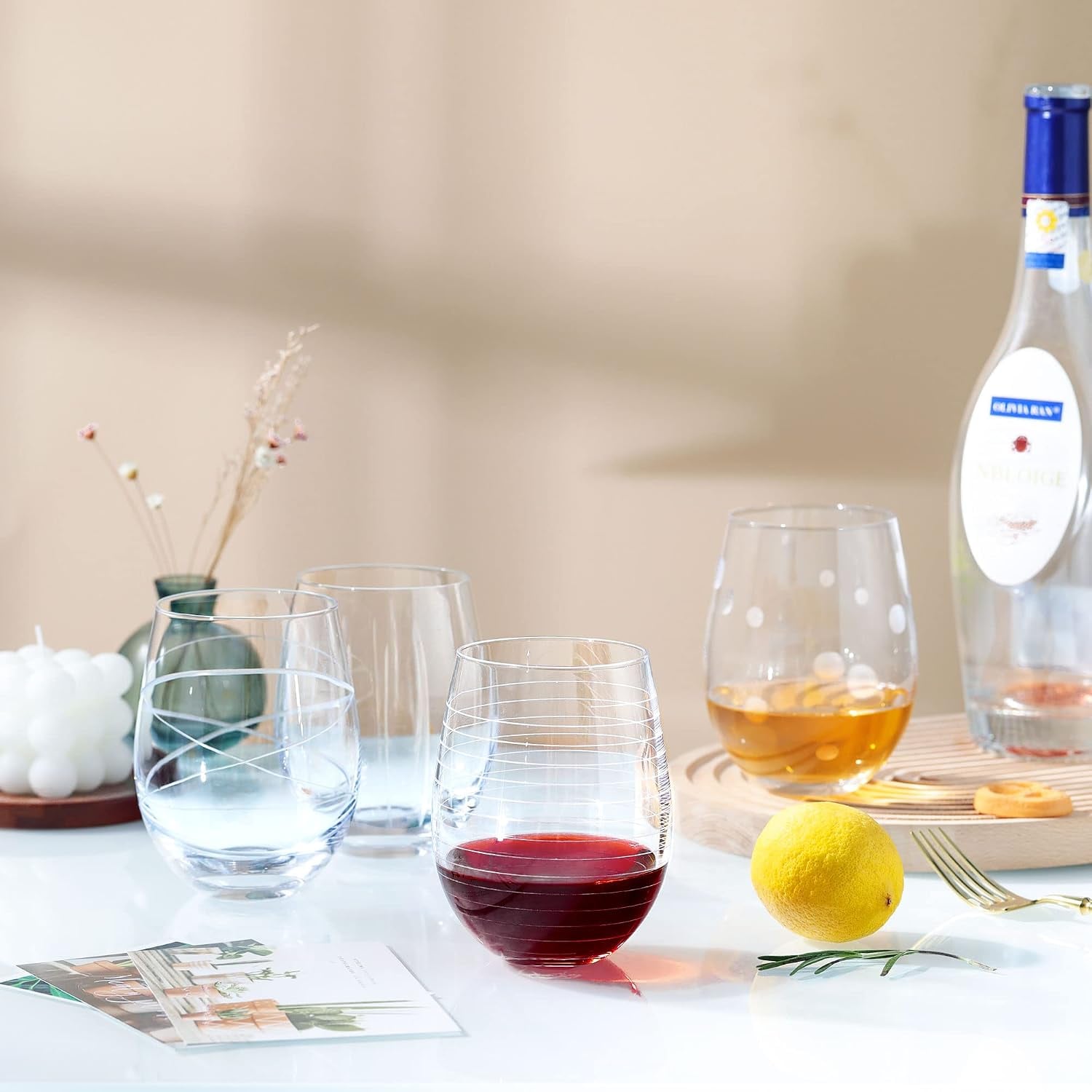
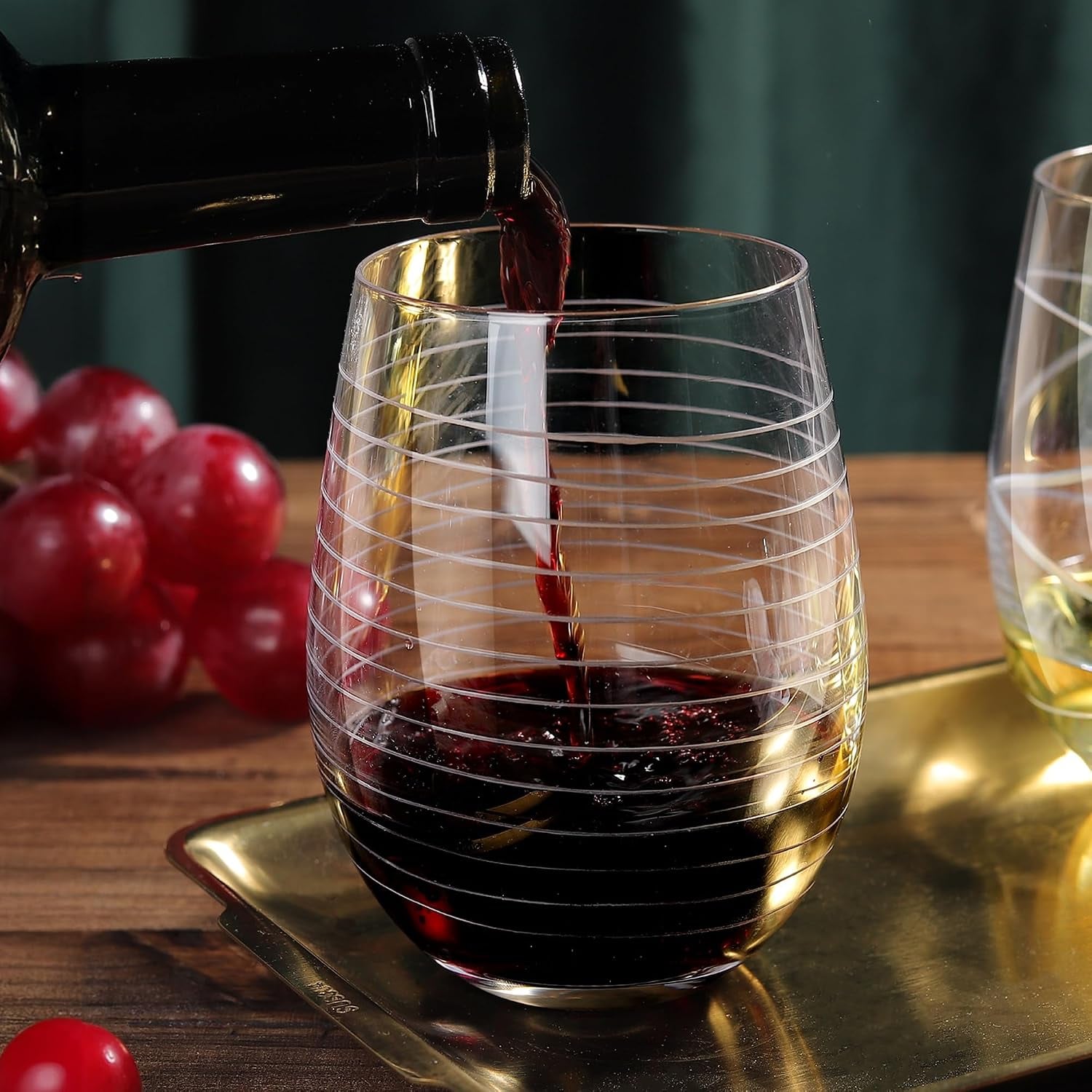
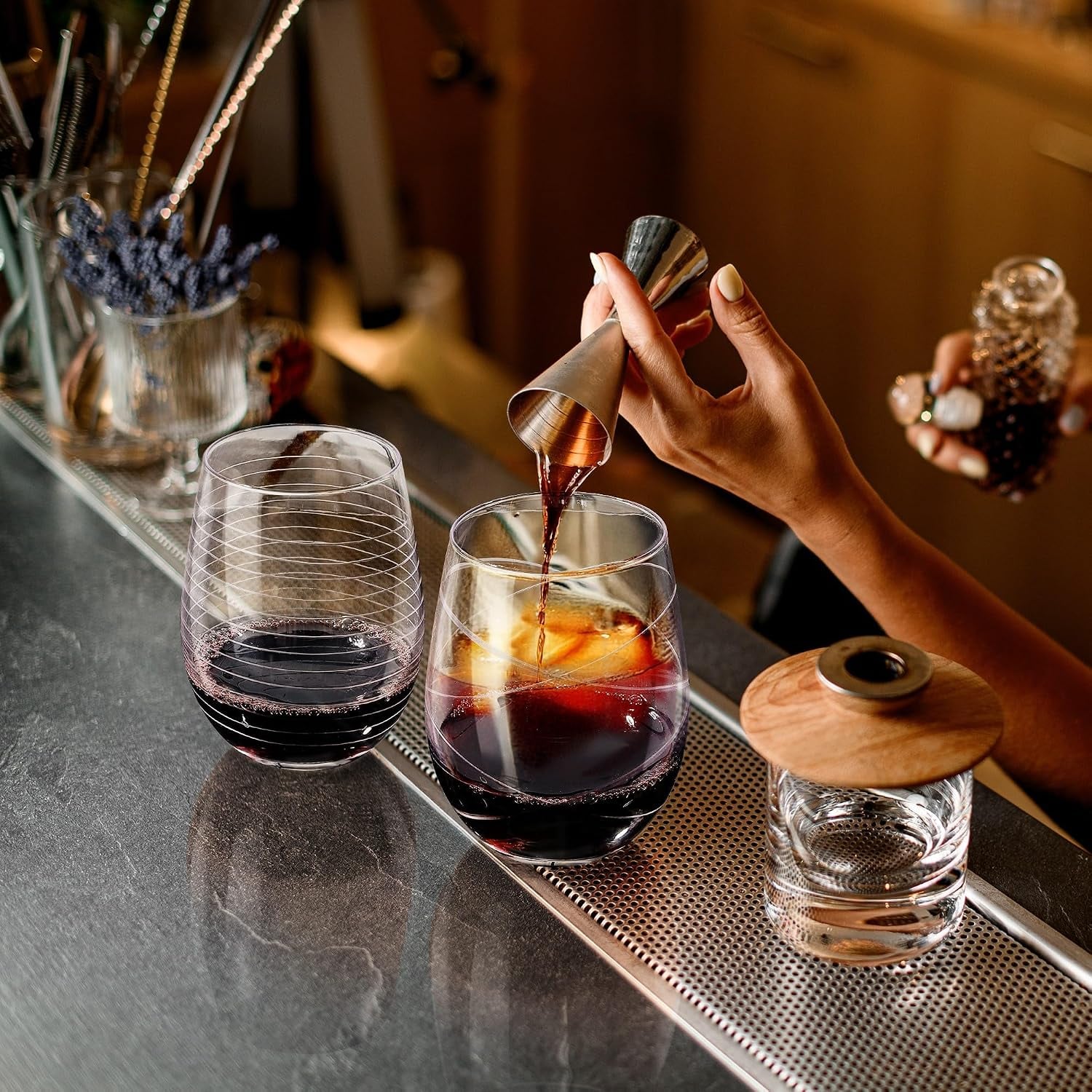
They suit flexible drinkers. Because these are tumblers at heart, they handle red wine, white wine, sparkling, spirits over ice, cocktails, juice and plain water. If you want one shape that does most jobs, rather than a cabinet full of specialist glassware, this is the practical answer. A good set of glass wine tumblers earns its shelf space.
They also suit gift buyers. Glassware is a safe present because almost nobody has enough of it, and a matching set of four feels considered without being personal in a risky way. Housewarmings, weddings, anniversaries and retirements all work.
Who they suit less: households with young children, since these are real glass and the product is listed for adults. Serious wine tasters who want varietal specific bowls will also want stemmed glassware alongside these rather than instead of them.
How to choose the right size and shape
Capacity is the first decision. A 520 ml glass is on the larger side for wine, and that is deliberate. A standard 150 ml pour sits at roughly a third full, which is exactly where wine likes to be, with headroom to swirl and release aroma. Smaller glasses force you to fill near the rim, which kills the swirl and traps the smell inside the glass instead of releasing it.
Larger capacity also future proofs the glass for other drinks. Add ice and mixer to a spirit and suddenly 300 ml feels tight. At 520 ml you have room.
Height and width matter for storage. At 11.9 cm tall these clear most standard cupboard shelves easily, unlike tall stemmed glasses that have to go in a special rack or sit on their side. The 7.1 cm opening is wide enough to get a hand and a sponge inside for washing, which sounds trivial until you have owned a narrow glass you cannot clean properly.
Then there is finish. Plain glass disappears into the background. A patterned glass does some of the table setting work for you. The dot, strip and swirl etching here reads as modern rather than fussy, which means it sits comfortably beside plain plates, patterned plates, wood, linen or bare table. If your existing crockery is already busy, that neutrality helps.
Finally, think about quantity. Four is a set. If you regularly host six or eight, buy two sets in one order so the batch matches closely.
Living with them day to day
These are listed as dishwasher safe, and that is what makes them usable rather than precious. Use the top rack, leave space between glasses so they cannot knock each other during the cycle, and avoid cramming them in beside heavy plates.
Hand washing is still the gentler route and it is worth doing when you have the time. Warm water, a soft sponge, a little mild detergent. Skip steel wool and scouring powder entirely, because abrasives are the one thing that will dull an etched surface.
Drying matters more than people expect. Water spots are mineral deposits left behind when droplets evaporate, and they show up badly on clear glass. Dry with a soft lint free cloth straight after washing and the problem vanishes.
Keep them away from heat. No microwave, no boiling water poured into a cold glass, no moving a warm glass straight into cold water. Thermal shock is the most common cause of a glass cracking for no obvious reason.
Store them upright with a small gap between each one. Do not stack them inside each other, because glasses that are not designed to nest can jam and then break when you force them apart.
The short version
If you want glassware that looks like you chose it, survives normal life, and handles wine, cocktails and water without complaint, a set of four engraved stemless wine glasses is a sensible buy. You get 520 ml of capacity in a short wide shape that is hard to tip, an etched pattern that will not wash off, BPA free glass, and dishwasher compatibility for the nights when washing up loses.
The compromise is temperature control on very slow drinks, and these are not for small children. Everything else about the design works in your favour. Four glasses, one box, table sorted.