
The complete guide
Choosing an Engraved Brass Compass That Gets Carried, Not Shelved
The gift problem this solves
Most milestone gifts fail in the same way. They look meaningful on the day, get photographed, and then sit in a drawer. Framed quotes, engraved plaques, novelty mugs. The sentiment is real, but the object has no job, so it stops being part of anyone's life within a month.
A compass is different because it does something. You can open it on a walk, use it to work out which way the hotel is, or just flick the lid while you think. That small bit of function is what keeps an object in a pocket or on a desk instead of in storage. Add a poem engraved inside the lid and you get the sentiment too, but the sentiment is carried along by something useful rather than standing on its own.
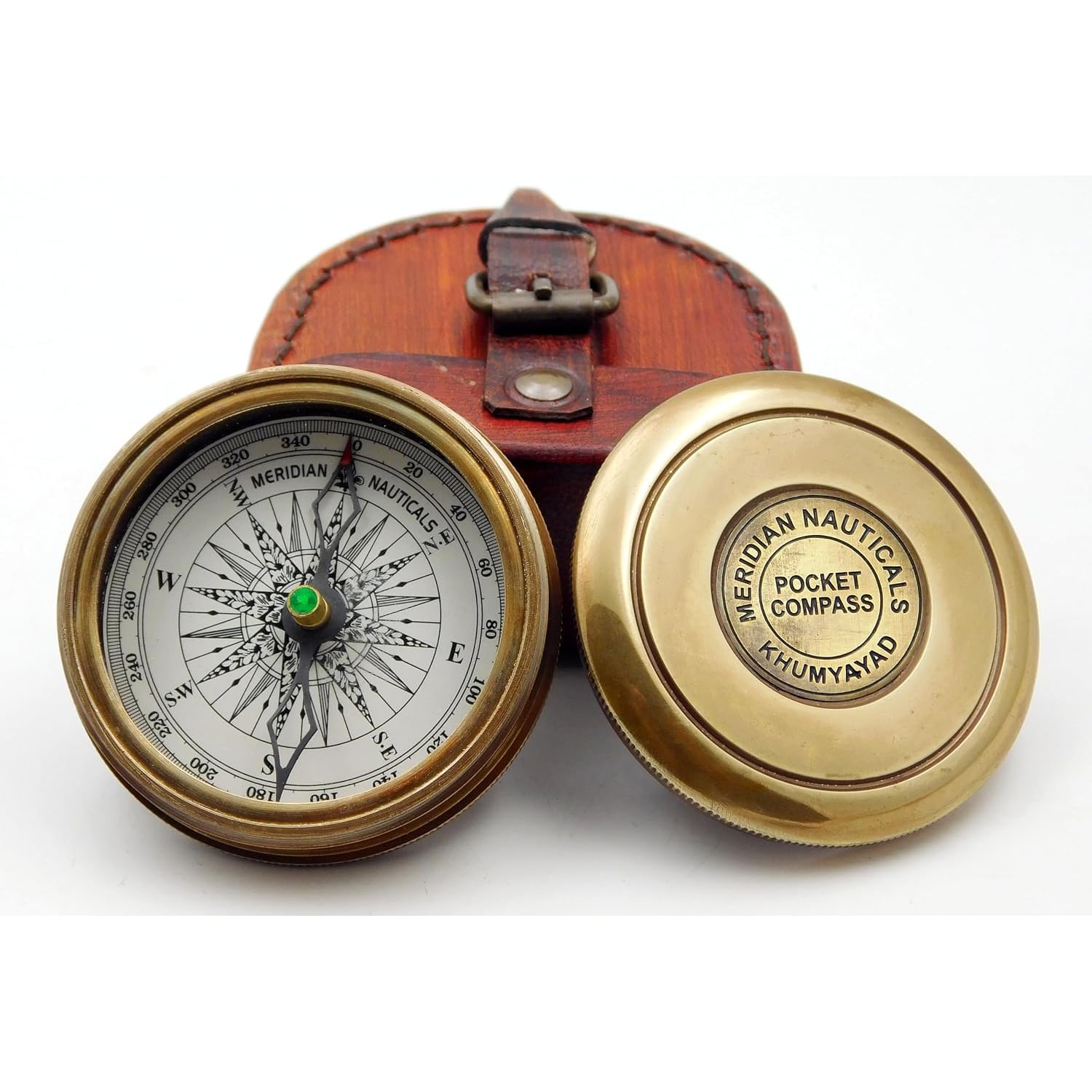
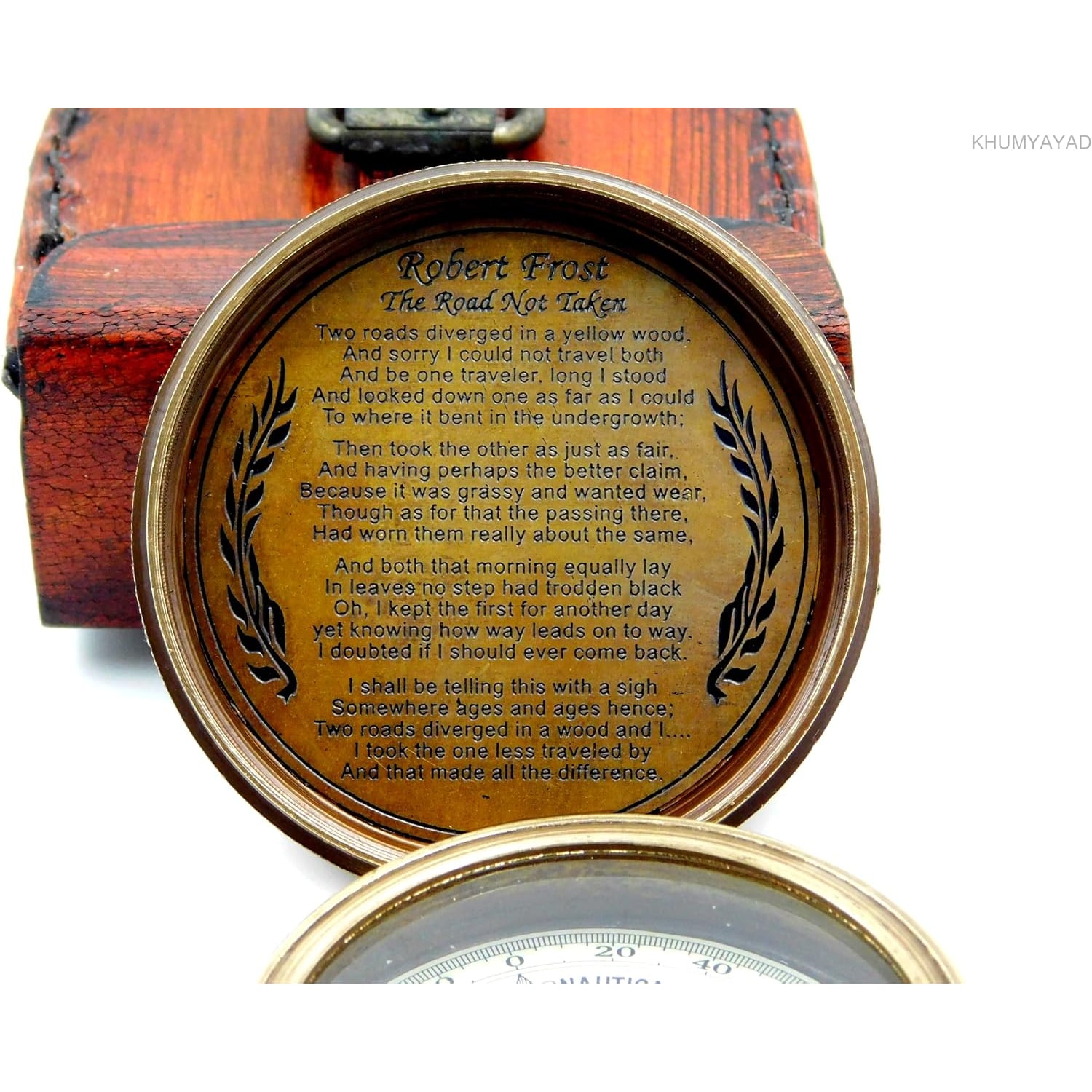
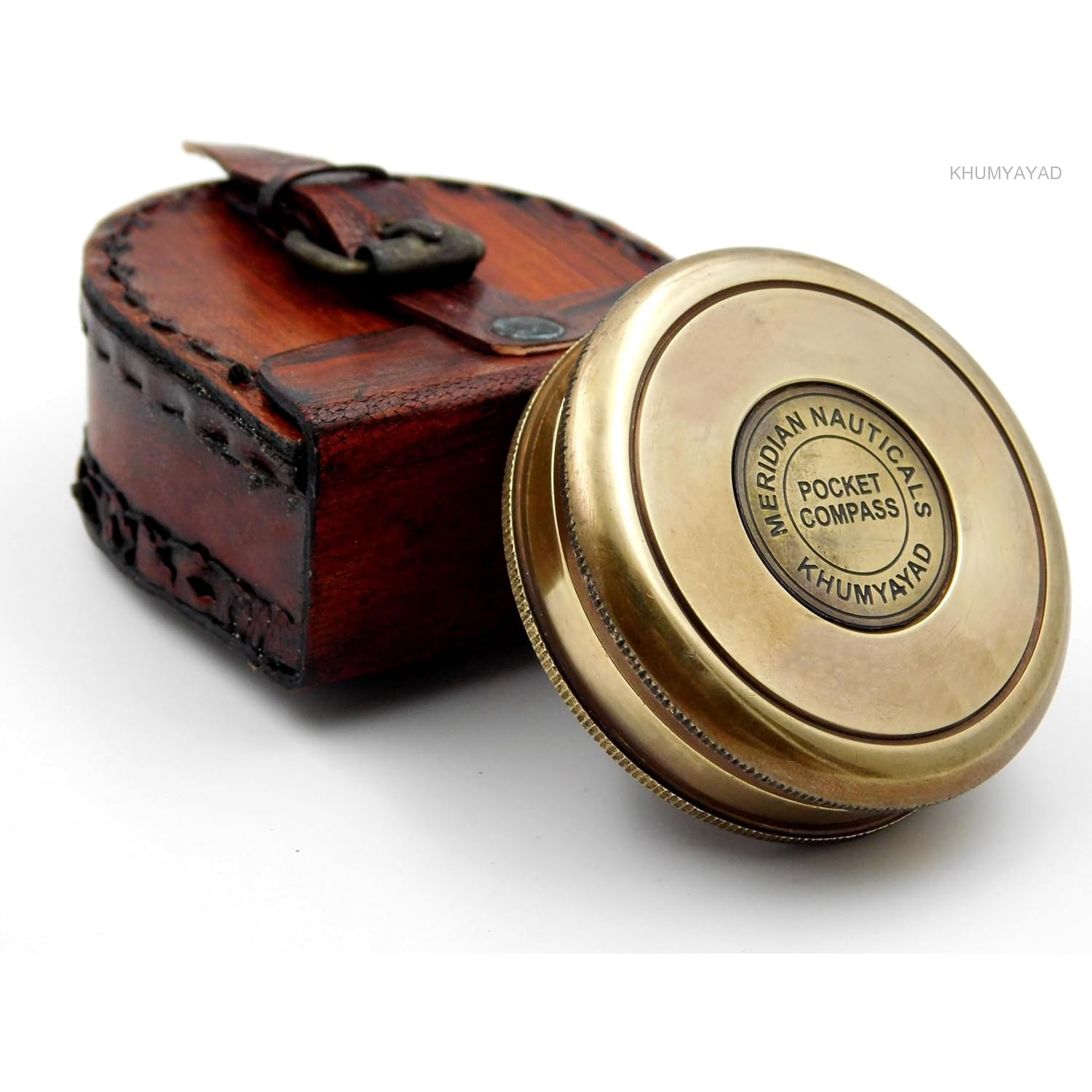
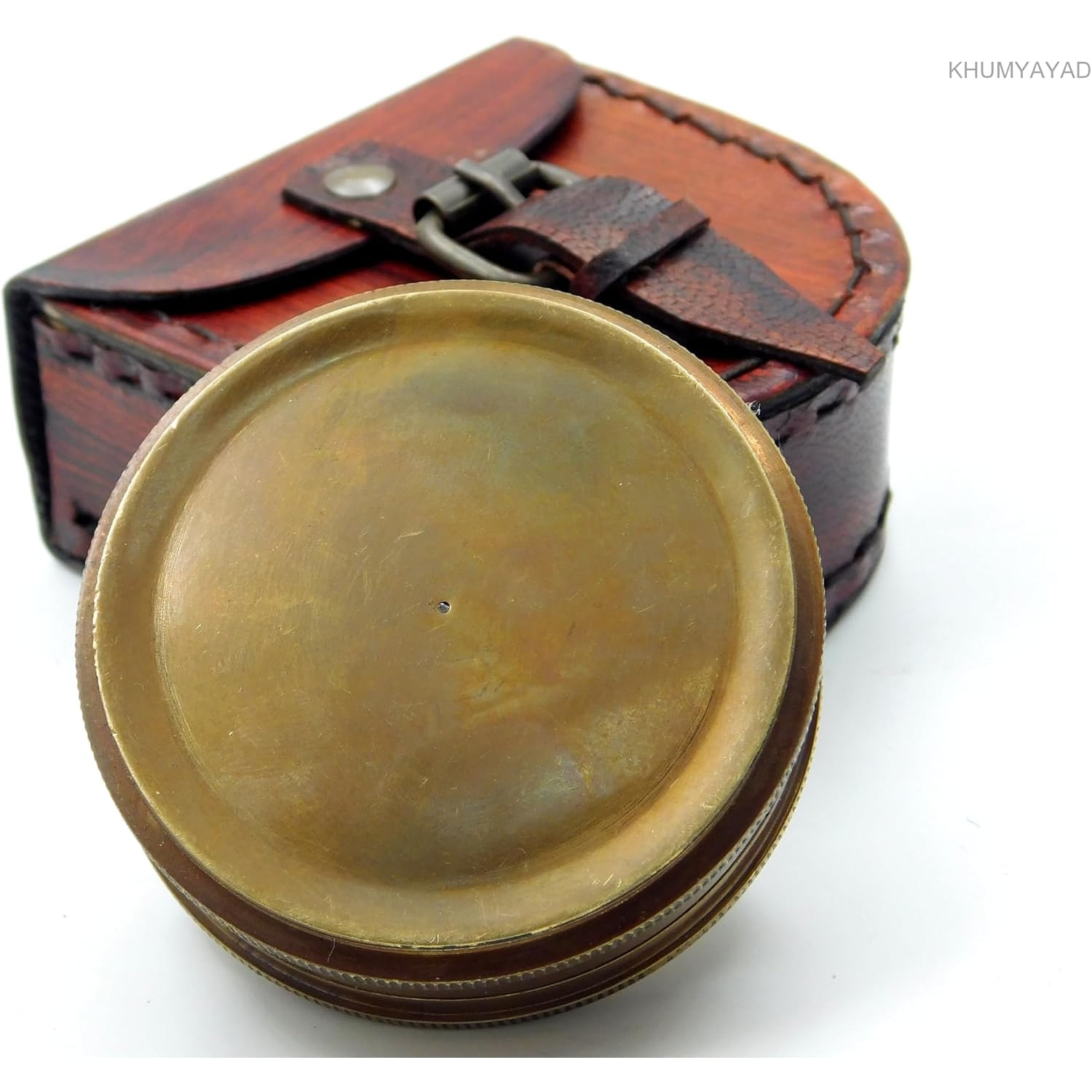
That is the honest case for this piece. It is a hand made brass pocket compass that works, with Robert Frost's "The Road Not Taken" engraved under the cap and a leather case to keep it safe.
How a pocket compass actually works
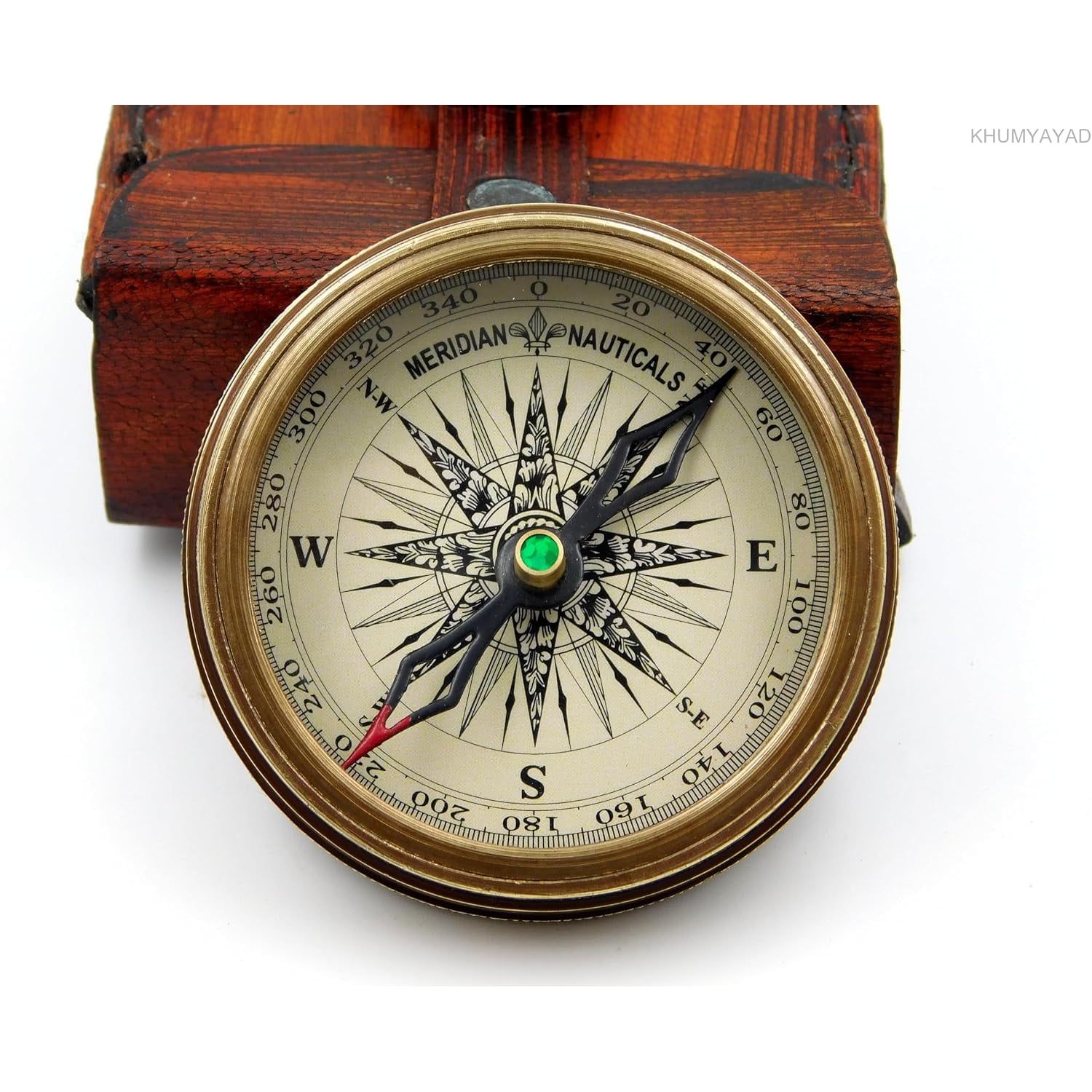
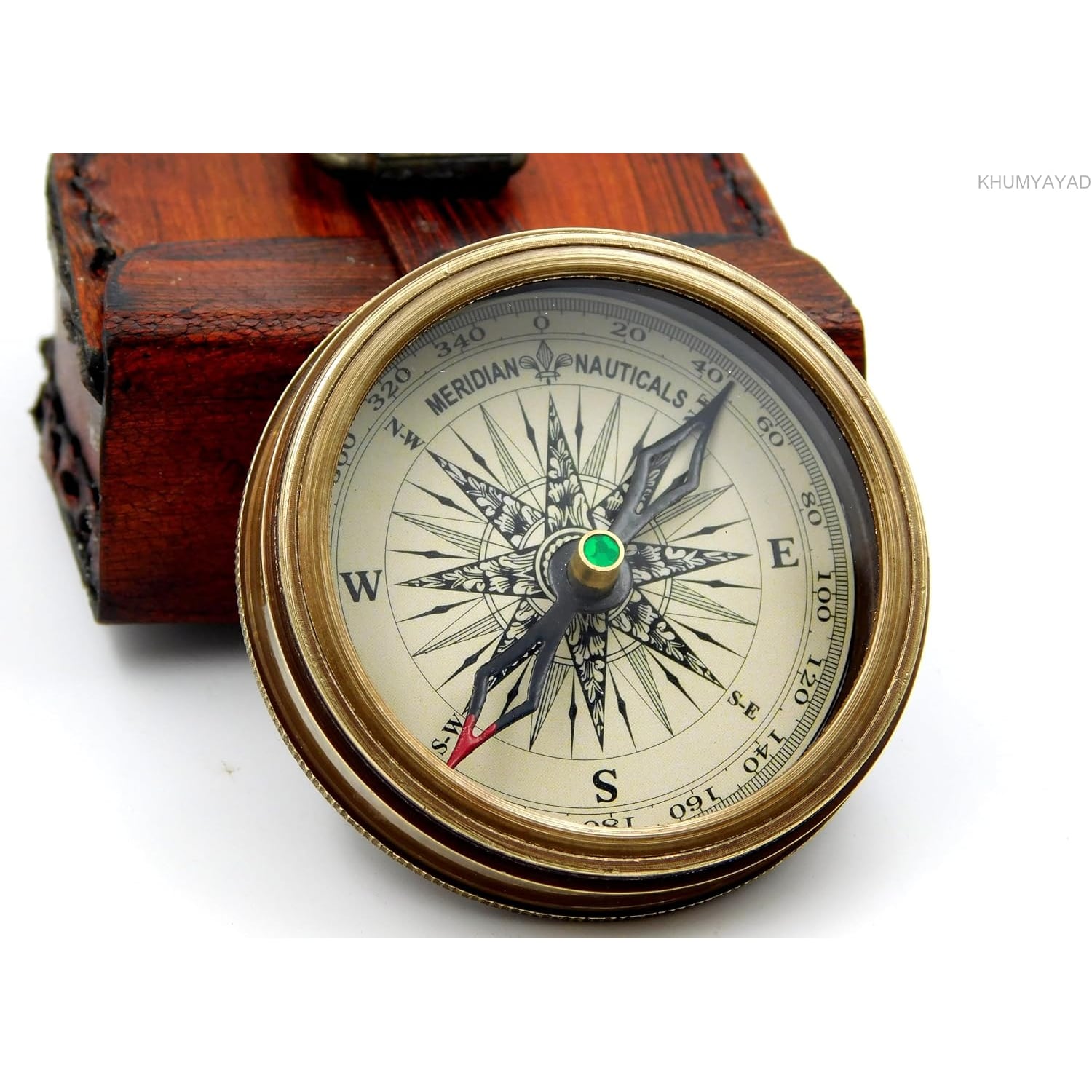
Inside the brass housing is a magnetised needle balanced on a fine pivot. The Earth has a magnetic field, and the needle lines itself up with it, so one end swings towards magnetic north. Open the lid, hold the compass flat and level in your palm, and wait a couple of seconds. The needle will wobble, then settle. Once it stops, you are looking at north.
Two things throw a compass off, and both are easy to avoid. The first is tilt. Hold it at an angle and the needle can drag or stick, so keep it level. The second is nearby metal and magnets. Phones, speakers, car dashboards, belt buckles, steel railings and laptop lids will all pull the needle around. Step away a metre or two, hold it out from your body, and let it settle again.
There is also the difference between magnetic north and true north, which varies depending on where you stand on the planet. For a walk in the hills or getting your bearings in a strange city, it hardly matters. For plotting a precise route on a map, you would adjust for it, and most people doing that kind of work carry a baseplate compass as well. Think of a pocket compass like this one as the best working pocket compass for everyday orientation rather than a surveying tool.
No batteries. Nothing to charge. Nothing to update. That is a large part of why these objects survive generations.
What brass brings to it
Brass has been the traditional material for instrument cases for a long time, and not only for looks. It is non magnetic, so the housing itself does not interfere with the needle. It is dense, which gives the compass that satisfying heft in the hand. And it ages rather than degrades.
This one is hand made in solid brass with an antique style finish, and it weighs 0.14 kg. Pick it up and you can tell immediately that it is not hollow or plated plastic. The weight does a lot of quiet work in how a gift lands.
The patina question comes up often. Brass reacts with air and the oils on your fingers, so over months it darkens in some places and polishes bright in others where your thumb rests on the lid. Some owners love that and never touch it with polish. Others like a brighter, more uniform look and give it a wipe with a brass cloth twice a year. Neither is wrong. What matters is knowing it will change, because a compass that looks identical in ten years is usually one nobody picked up.
The poem, and why it keeps being chosen
"The Road Not Taken" is engraved on the inside face of the cap. It is not visible from outside, so the recipient finds it the first time they open the compass. That small reveal is part of the design.
The poem gets quoted at graduations, leaving dos, retirement parties and weddings, usually for its closing lines about taking the road less travelled. Pairing it with a direction finding instrument is an obvious pun, but it is a good one, and the pairing is why this sells as the best poem engraved compass for people marking a change.
It suits a school or university leaver, someone starting a new job in a new city, a friend going travelling, a parent retiring, or a partner on an anniversary. It also makes sense for groomsmen, where the brief is usually something masculine, lasting and not another hip flask.
Who it suits, and who it does not
It suits people who like objects with a bit of history in their design. Walkers and campers who want a simple analogue backup when the phone battery dies. Desk workers who like something tactile to turn over while thinking. Anyone being sent off somewhere new.
It is less suited to a few cases. If you need serious navigation gear for off trail hiking, buy a proper baseplate compass with a rotating bezel and use this as the keepsake alongside it. If the recipient is a young child, the glass lens, hinge and metal weight make it better held under supervision. And if you specifically want custom names or dates engraved, note that this piece comes with the Frost engraving as standard and no personalisation option.
How to choose between compass gifts
Shoppers comparing options usually weigh four things.
Function first. Plenty of cheap gift compasses have a needle glued in place or one so poorly pivoted it never settles. Ask whether the listing says the compass is functional. This one is described as fully functional and correct in showing direction.
Material second. Solid brass behaves differently from brass plated zinc. Plated items chip at the edges and expose grey metal underneath, while solid brass just wears. Weight is a decent clue, and 0.14 kg for a 5.7 cm compass is consistent with solid metal.
Third, protection. A pocket compass without a case gets scratched fast, because pockets are full of keys and coins. The leather case here is not a bonus extra, it is the thing that keeps the lens clear for years. Anyone looking for the best compass with leather case is really looking for one that still looks good in a decade.
Fourth, presentation. Gifts get handed over in front of people. A brass compass sliding out of a leather case does the job with very little extra wrapping needed.
Looking after it
Care is simple and mostly about moisture. Wipe the compass with a soft dry cloth after handling, especially in hot weather when hands are damp. Keep it out of the bathroom and out of a car glovebox over a wet winter. If it gets splashed, dry it straight away and let the leather case air dry away from direct heat, never on a radiator.
Keep it away from magnets and speakers when stored. A drawer with a magnetic catch is a poor spot. A shelf, a desk tidy or a bedside drawer is fine.
Polish only if you want to. Use a cloth made for brass, work around the glass, and go gently over the engraved lettering so you do not fill the lines with residue. A touch of leather conditioner on the case once or twice a year keeps it supple.
If the needle ever seems sluggish, the usual cause is nearby metal rather than damage. Move somewhere open, hold it level, and give it a few seconds.
The short version
This is a hand made solid brass pocket compass, 5.7 cm across, 0.14 kg, with an antique style finish, a working needle, Robert Frost's "The Road Not Taken" engraved inside the lid, and a leather carrying case included. The brand and manufacturer are KHUMYAYAD and the model number is 1477. Colour, country of origin and case measurements are not specified in this record.
Buy it if you want a milestone gift that has a reason to be carried. Skip it if you need precision navigation equipment or custom engraved names. For most people marking a beginning, an ending or a long trip, a working brass compass with a poem hidden under the lid is about as good as keepsakes get.