
The complete guide
How To Choose Matching Couples Rings That Actually Get Worn
The problem with most couple jewellery
Walk into any jewellery section and you will find two extremes. On one side there are fine rings that cost more than a holiday and spend most of their life in a safe. On the other there are novelty sets that look charming in the photo and turn dull in six weeks. Neither of those ends up on a hand every day.
What most couples actually want sits in the middle. Something with a clear meaning behind it, built from a metal that can handle washing up and gym bags, at a price that does not require a serious conversation about savings. That is the gap a matching half-heart band like this one is built for.
The other common frustration is sizing. Couple sets are often sold as a fixed pair, which means one person gets a good fit and the other gets something that spins or pinches. A ring that does not fit does not get worn, no matter how nice the design is.
How the half-heart design works
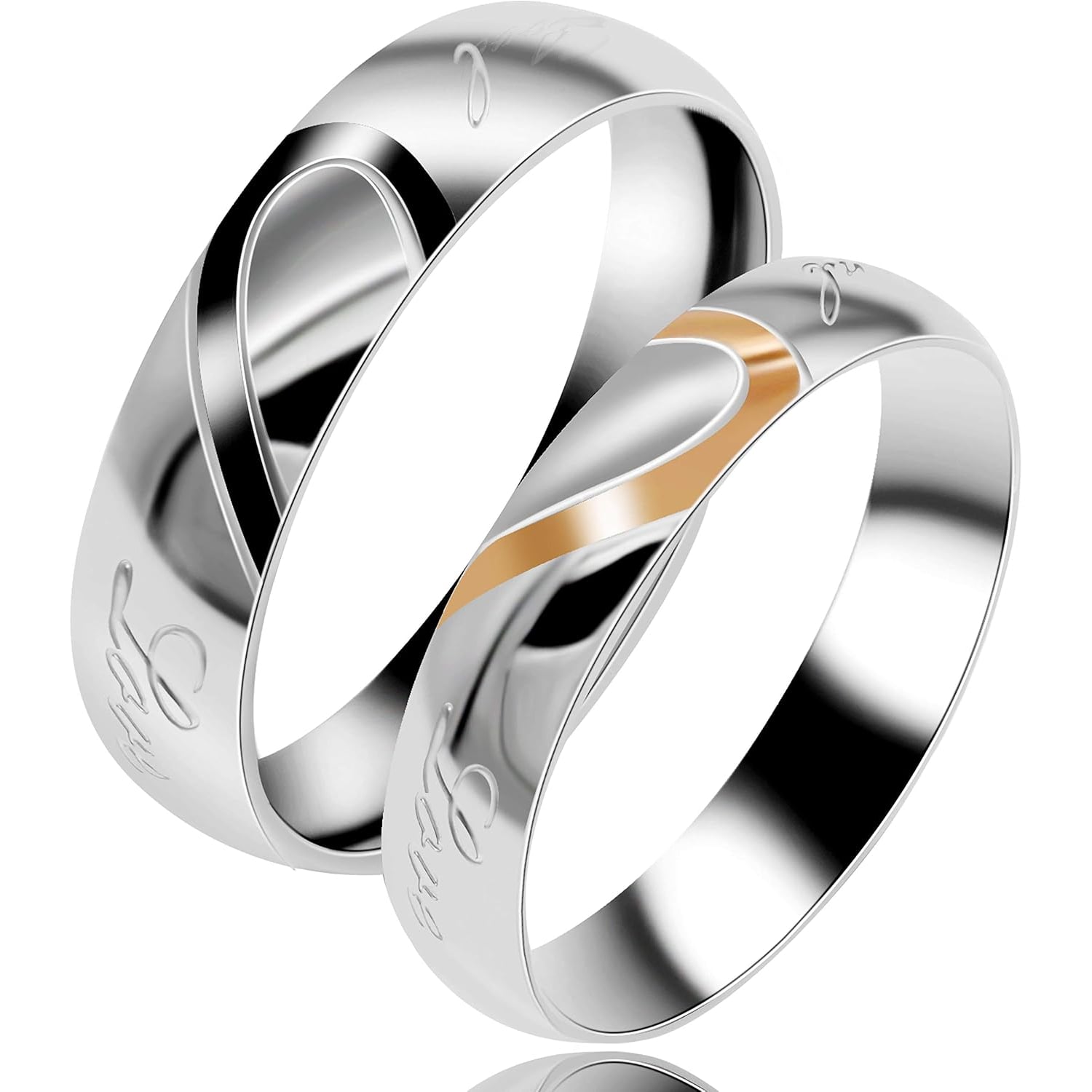
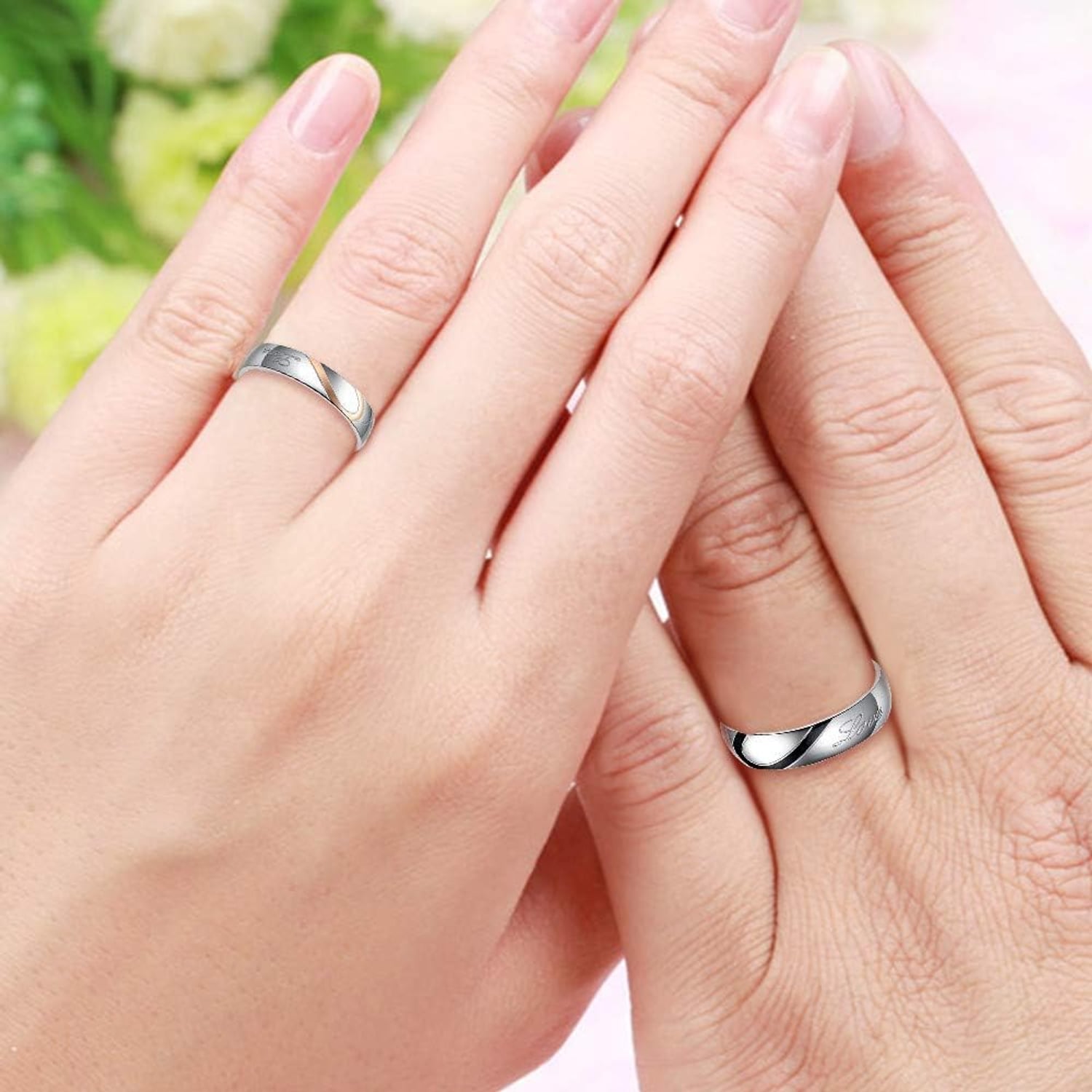
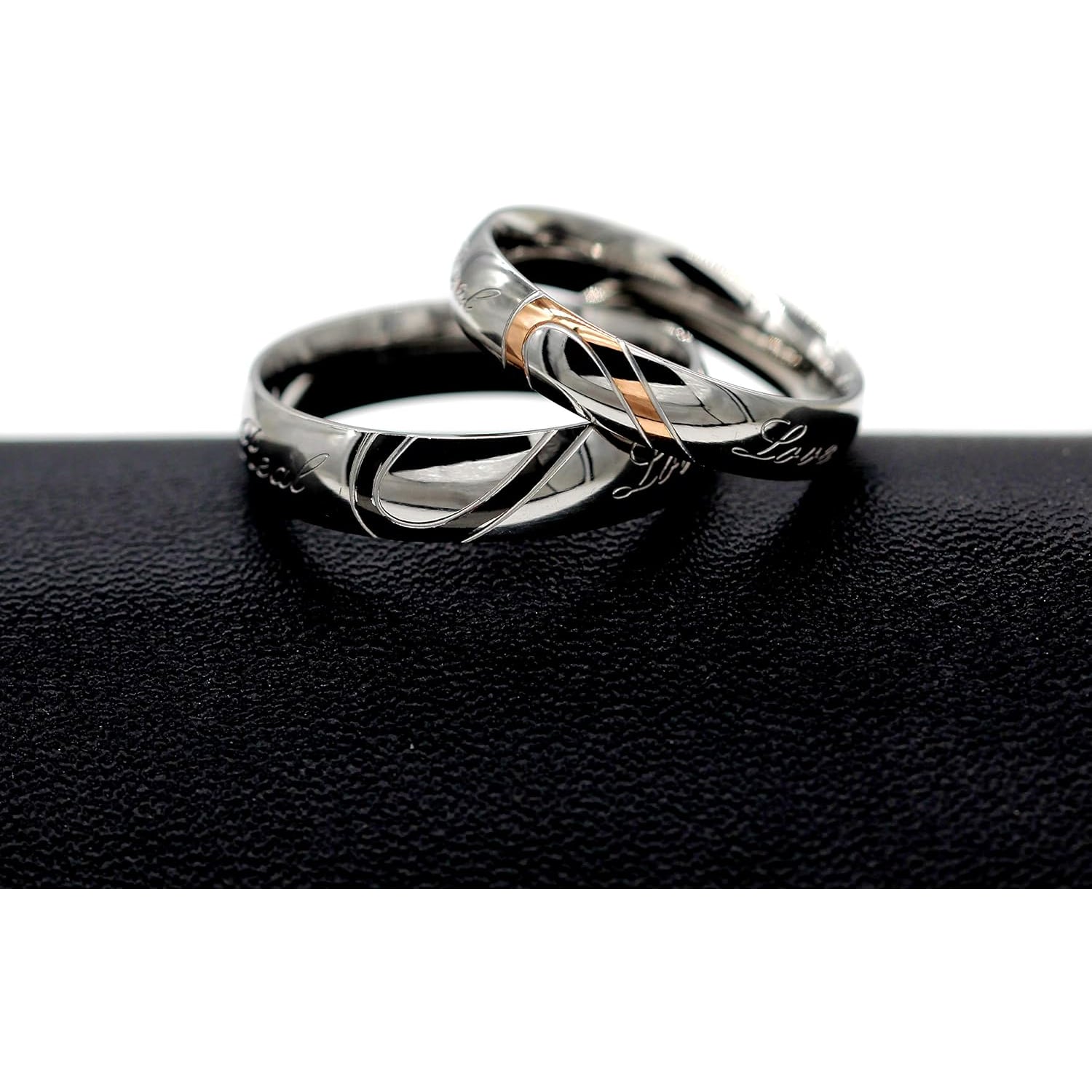
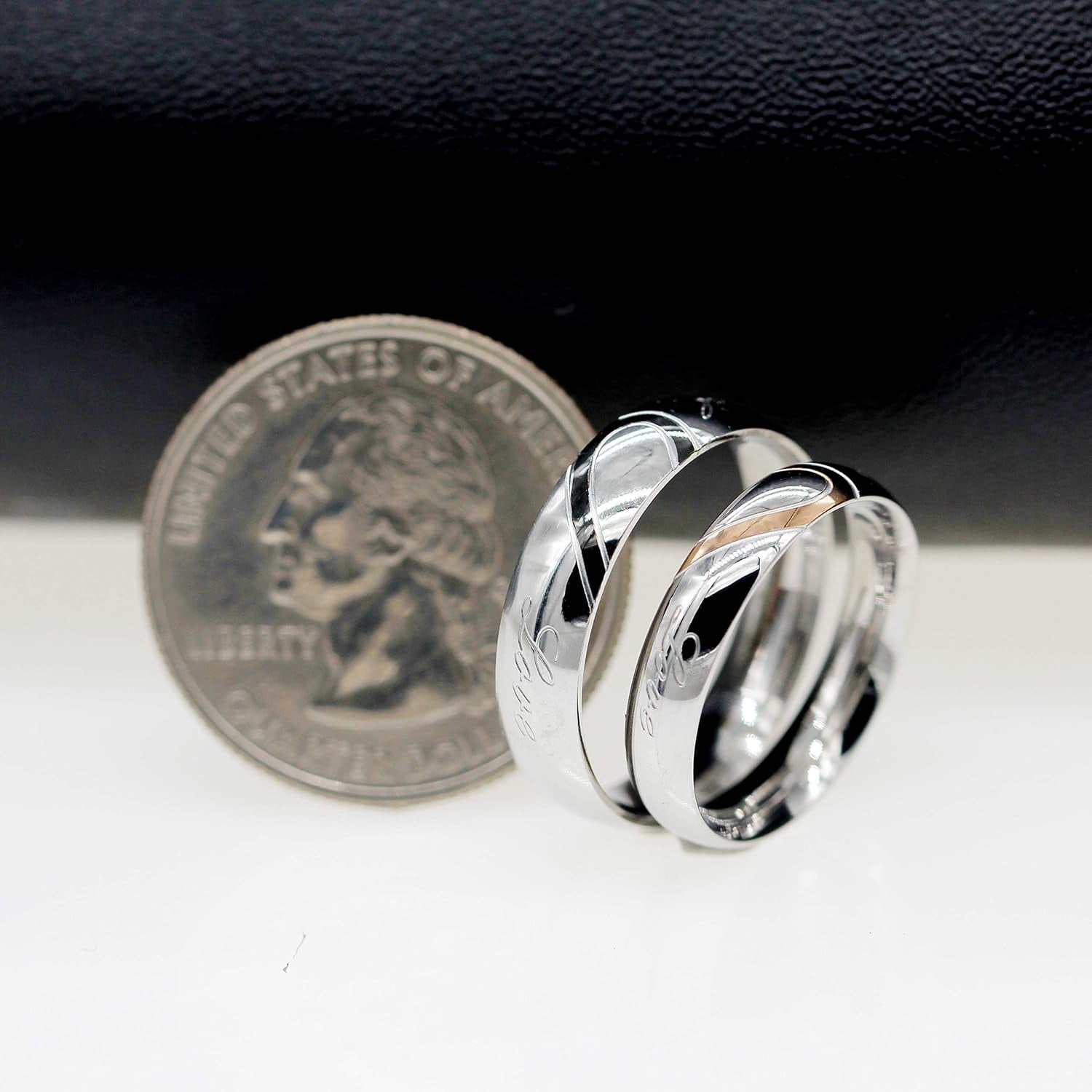
The idea is simple. Each band carries one half of a heart shape cut into its profile. Hold the two rings next to each other and the shape closes into a complete heart. Separate them and each ring still reads as a clean band with a distinctive edge, not an obviously incomplete shape.
That is the part that makes it work day to day. You are not wearing half a thing. You are wearing a band that happens to fit a specific other band, and only the two of you need to know what the edge means.
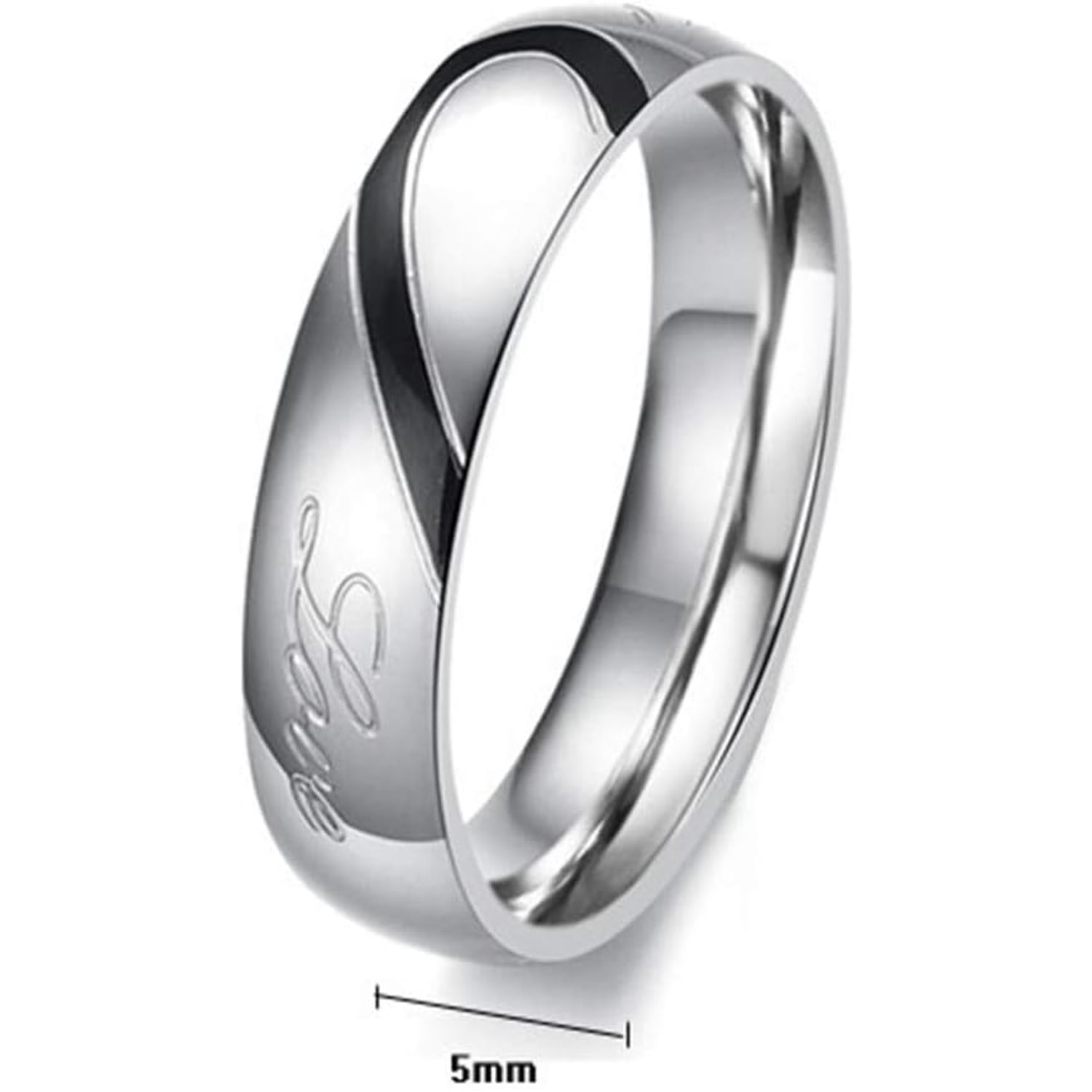
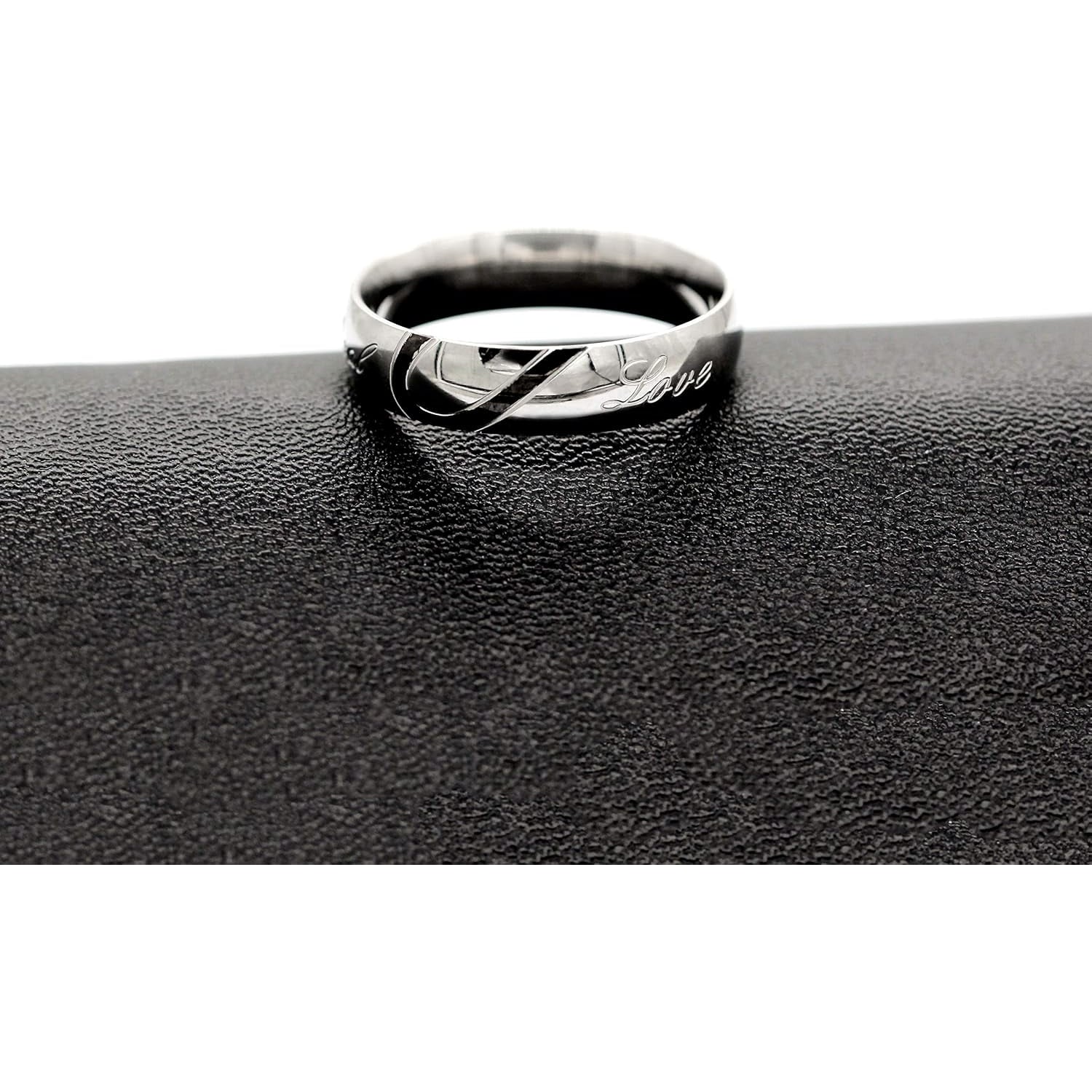
The words "Real Love" are engraved into the band. Engraved matters more than the wording. When lettering is printed or coated onto a surface, the first places it disappears are the high points that rub against things, so printed text starts looking patchy quickly. A cut engraving sits below the surface, and even years of wear only softens the edges of the cut rather than erasing it.
Why stainless steel is the practical pick
Metal choice decides whether a ring survives real life. Soft metals scratch, plated metals wear through at the contact points, and silver needs regular polishing to stay bright.
Stainless steel sidesteps most of that. It resists tarnish, so you are not reaching for a polishing cloth every month. It shrugs off water and sweat better than plated base metals. And it is hard enough that daily knocks leave less of a mark than they would on a soft alloy.
There is one trade-off worth knowing. Because stainless steel is hard, most jewellers will not resize it. Nobody is going to stretch or shrink this band for you later. That makes getting the size right at the start the single most important decision in the whole purchase.
The setting and the stones
This ring uses a bezel setting with two stones. In a bezel setting, a rim of metal wraps around the edge of the stone and holds it in place, instead of the little claws you see on a classic solitaire.
A few things follow from that. The stones sit lower, so they catch far less on jumper sleeves, pockets, and car seat fabric. The edges of the stones are protected by metal, which is where chips usually start. And the overall look is cleaner and more modern than a prong setting.
If you have ever lost a stone from a prong ring, you will understand why bezel settings show up so often on rings meant for everyday wear. There is simply less that can bend or loosen.
Buying one ring, not a pair
This is the part people miss, so it is worth saying plainly. The listed price covers one ring. If you want both halves of the set, you order two.
At first that feels like a catch. In practice it is the better arrangement. Hands differ enormously, and the gap between two people's ring sizes is often three or four sizes. A fixed pair forces one person to take the wrong fit. Buying individually means both rings actually sit where they should.
It also means you can stagger the purchase. Plenty of people buy their partner's ring first as a surprise and add their own afterwards, once the size question has been settled without spoiling anything.
Getting the size right
Measure at the end of the day. Fingers swell in heat and after activity, and they shrink in cold. A ring measured first thing on a winter morning will feel tight by evening.
The paper strip method is reliable enough for most people. Wrap a thin strip around the base of the finger, mark where it overlaps, lay it flat, and measure the length in millimetres. That number maps to a standard size chart. Do it twice on different days and take the larger result if the two differ.
If your knuckle is noticeably wider than the base of your finger, size up slightly so the ring passes over it. A ring that will not go on is a bigger problem than one that sits a touch loose.
The supplier record lists the ring size as V for this item. Check the size options shown at checkout before you confirm, and if the choices are unclear, ask us first.
Who this suits
This style lands best with couples who want something meaningful on their hands without the weight of a formal engagement ring. Promise rings, anniversary gifts, and first serious milestones all fit the brief.
It also works for people with jobs where a raised stone is a nuisance. Nurses, mechanics, teachers, anyone wearing gloves repeatedly through a shift. A low bezel setting and a light band cause far fewer problems than a high-set stone.
It is less suited to someone who wants a heavy, substantial ring with real presence on the hand. At 0.02 kg this is a light band by design, and light is what makes it easy to forget you are wearing it.
Looking after it
The routine is short. Wipe the band with a dry cloth after wear to lift skin oils. Every few weeks, wash it in warm water with a drop of mild soap, work gently around the stone setting with a soft toothbrush, rinse, and dry completely before putting it away.
Take it off before swimming, before cleaning with bleach or strong chemicals, and before applying hand sanitiser. Perfume, hairspray, and lotion leave residue around settings, so put jewellery on last when getting ready.
Store it in a pouch or a lined box rather than a dish with other rings. Most of the fine scratching that dulls a band over time happens in storage, not on the hand.
Pairing and stacking
Half-heart bands sit comfortably next to a plain band if you later add a wedding ring. Keep the finish family consistent, so steel next to steel rather than mixing with yellow gold, and the pair will read as intentional.
If you are giving it as a gift, think about the moment more than the packaging. A ring like this carries its meaning in the matched edge, and that is something you explain once, in person, and then never have to explain again.
The short version
This is a matching half-heart band in stainless steel, engraved with "Real Love", with a bezel setting holding two stones. It is sold as a single ring, so you order one for each person and both get a fit that works.
Stainless steel keeps the care simple and the shine steady. The bezel keeps the stones protected and out of the way. The light weight keeps it on the hand rather than in a drawer.
Measure both fingers properly, order the right sizes, and this is the kind of ring that becomes part of the routine instead of a thing you remember to wear.