

The complete guide
Choosing a Bible Verse Engraved Compass That Actually Gets Carried
The problem with group gifts
Anyone who has organised a baptism, a confirmation class or a graduation morning tea knows the same headache. You need twenty gifts. They have to mean something. They cannot cost a fortune each. And they cannot all be identical, because handing out twenty copies of the same thing feels like a conference goodie bag rather than a blessing.
Most people end up with bookmarks, wall plaques or small framed prints. Those are fine. The trouble is what happens afterwards. A bookmark gets lost inside three weeks. A plaque sits in a box because nobody has a spare hook. The gift stops existing the moment the event ends.
A compass is different because it rides along with the person. Clip it to a keyring and it is in a pocket every day. That is the real test of a keepsake, whether the recipient keeps touching it.
What this set is
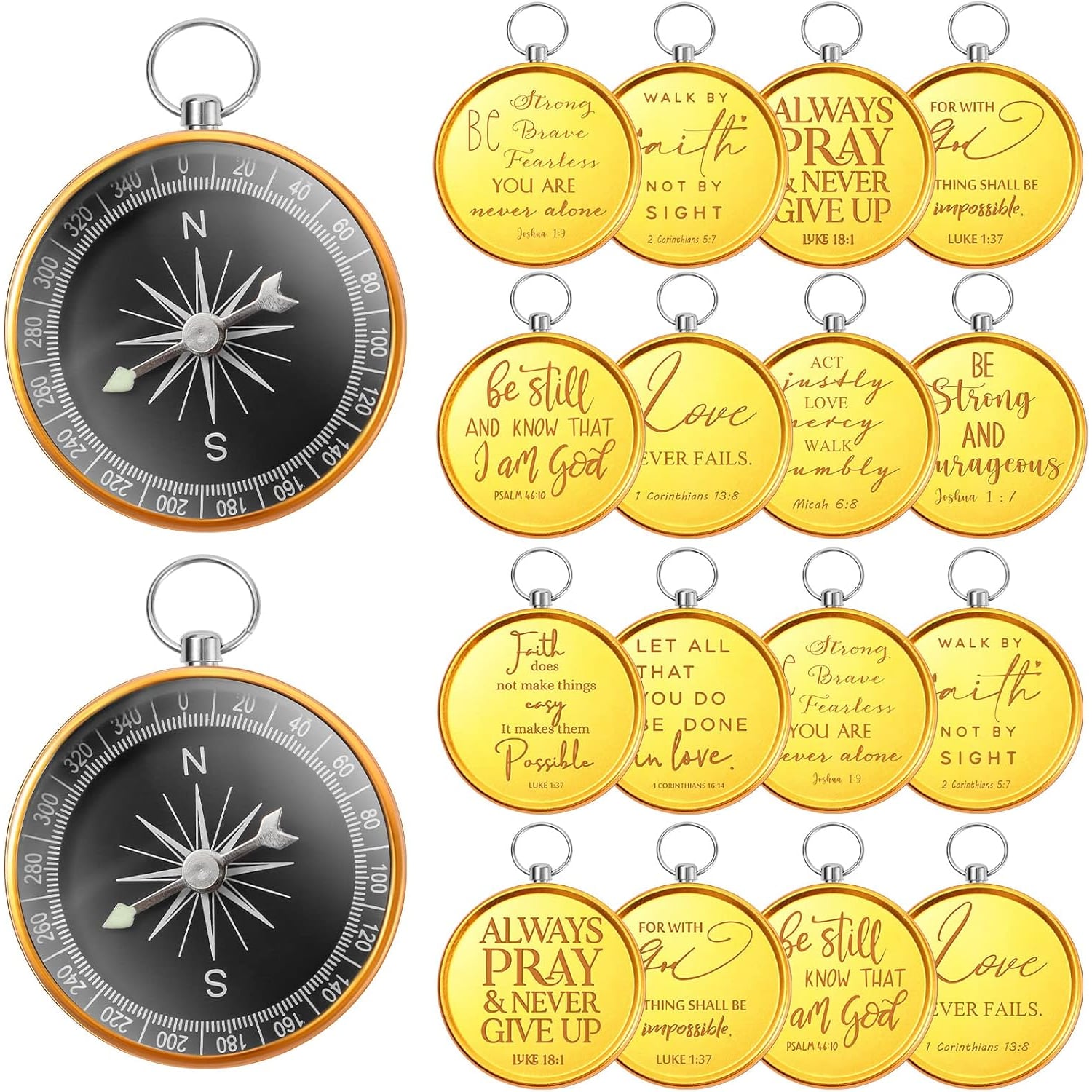
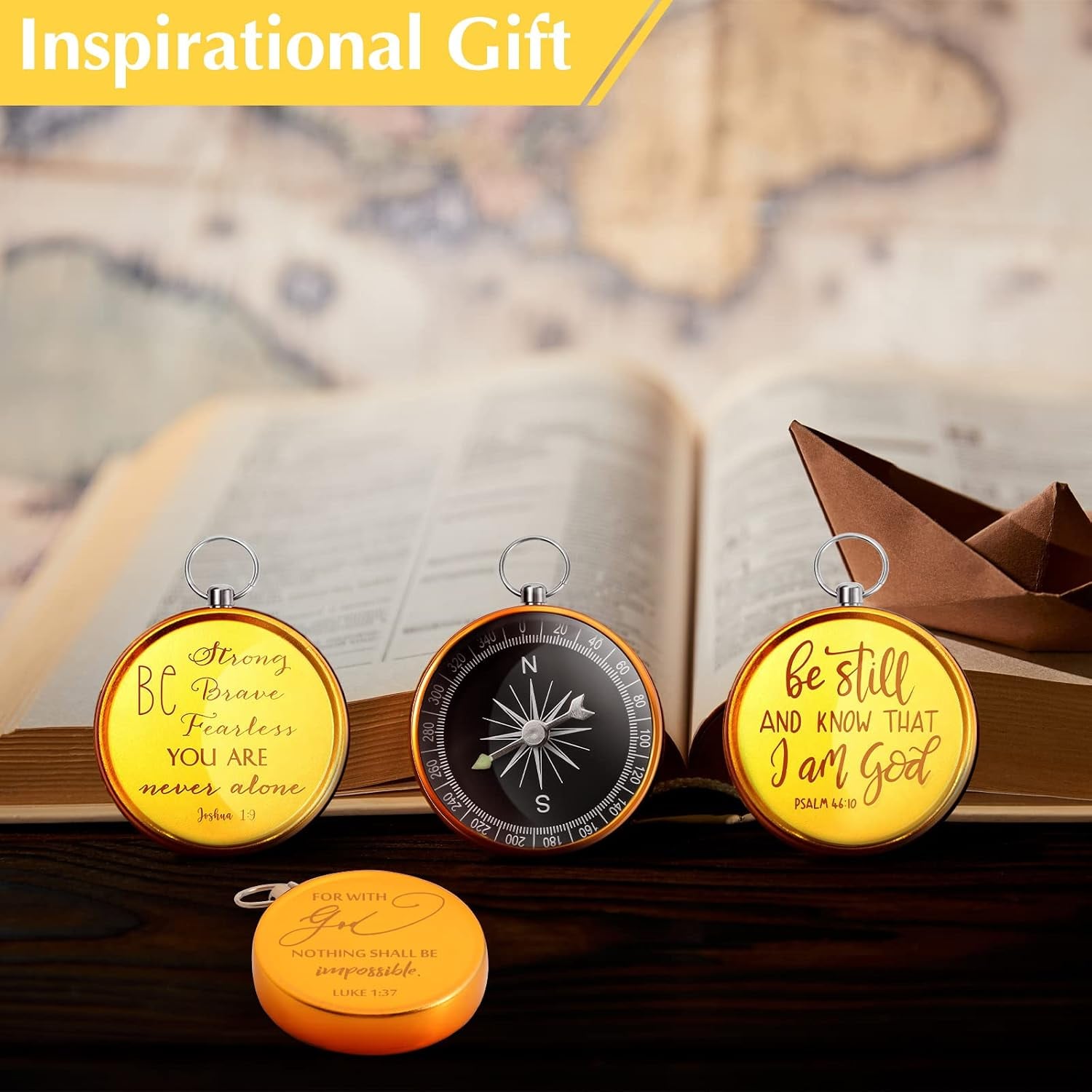
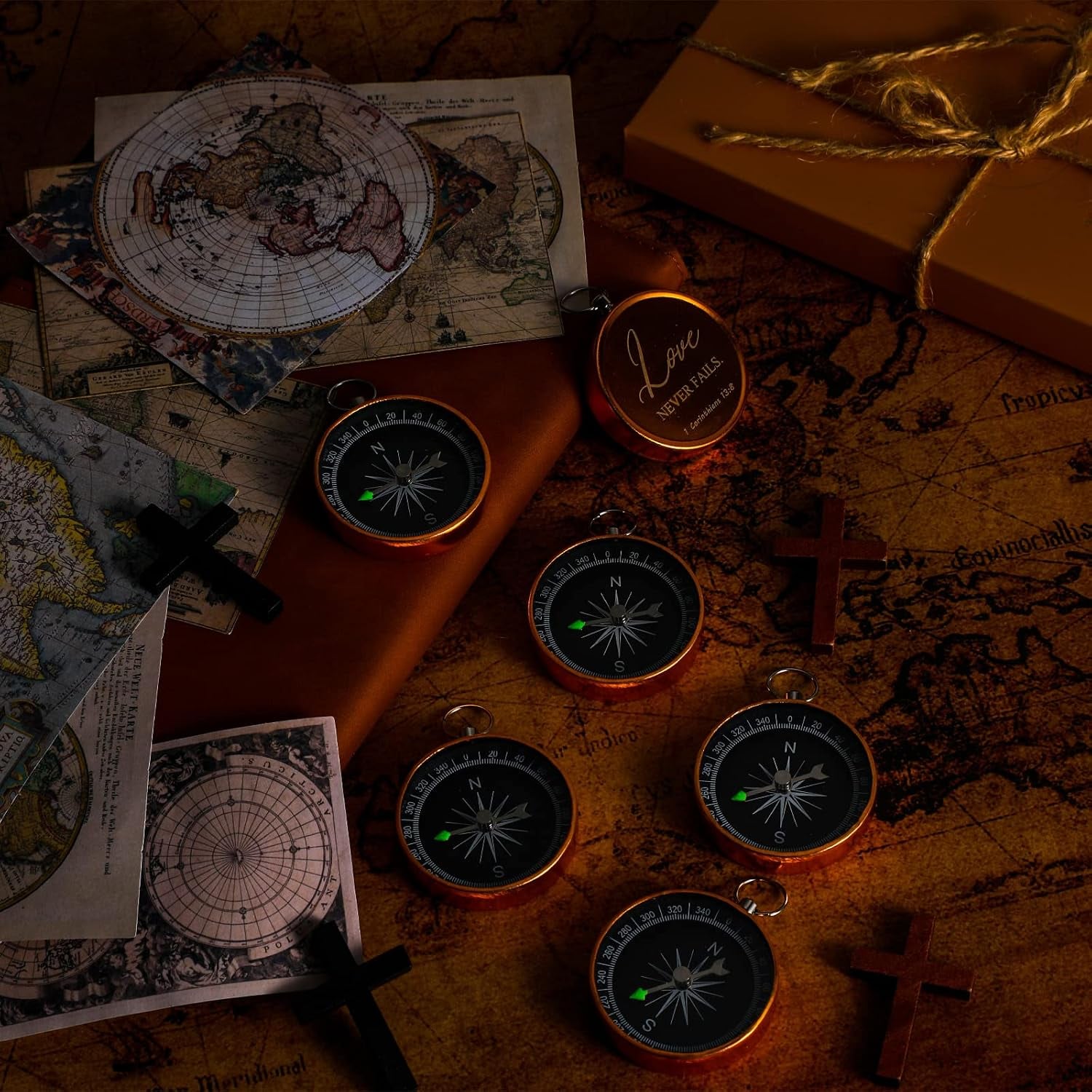
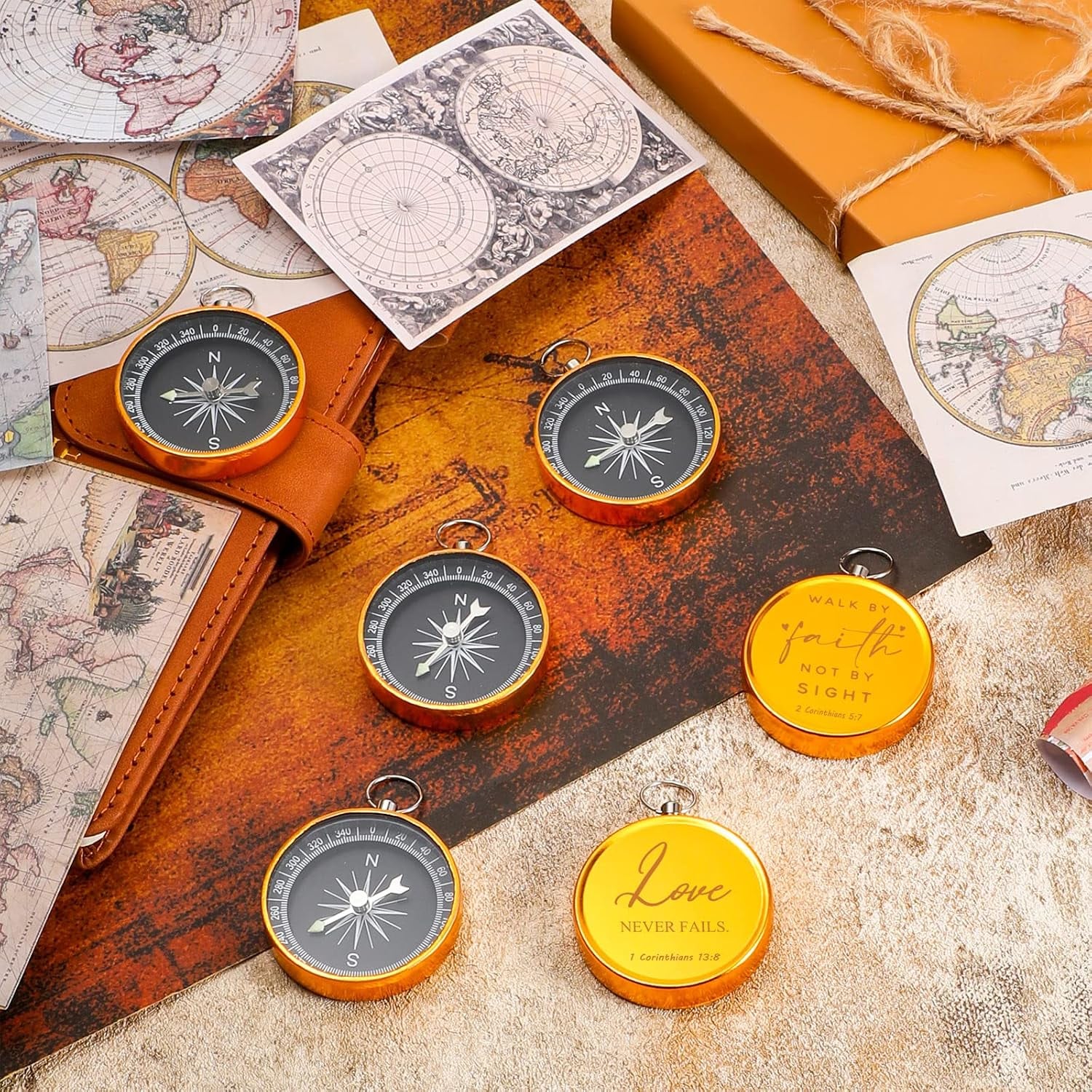
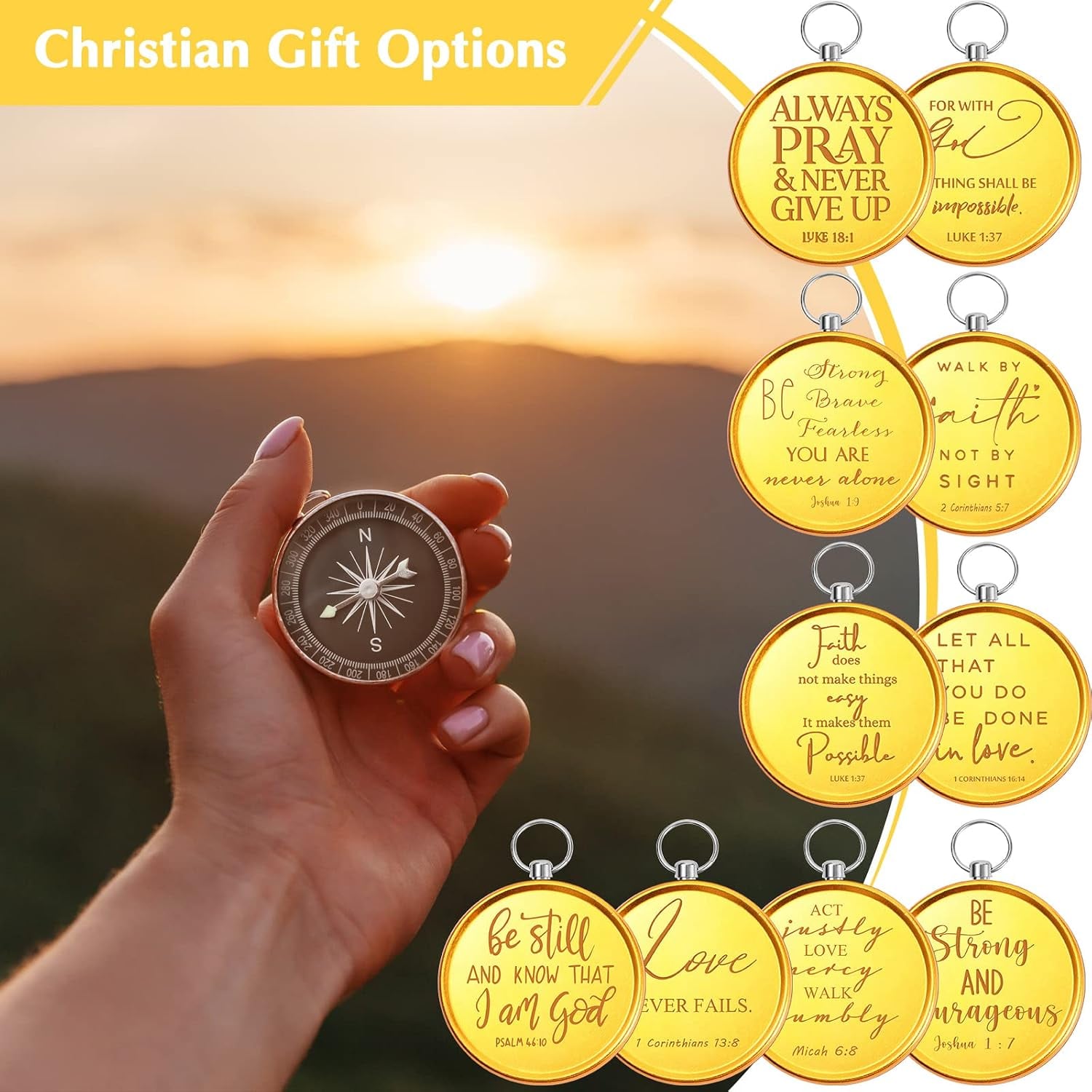
Twenty engraved compasses in one box, arranged as ten designs with five pieces of each. Each case is aluminium alloy and measures about 6 centimetres long by 4.4 centimetres wide. There is a ring on the body so it works as a keyring, and the pointer is fluorescent so it stays readable as the light drops.
The lids carry vintage-style scripture quotes. That is the heart of the gift. The compass does the rest of the talking without you needing to explain anything, because the image of finding your way is one people get straight away.
How a pocket compass works
The needle inside is magnetised and pivots freely. Left alone on a flat surface, it swings until it lines up with the earth's magnetic field, and the marked end settles pointing roughly north. From there you can work out the other directions off the dial.
Three things throw this off, and they catch out most first-time users. Metal is the big one. Hold a compass against a car bonnet, a steel gate or a camp stove and the needle will chase the metal instead of the planet. Electronics are the second, so keep it away from phones, speakers and anything with a motor. The third is tilt. Hold it flat and level, or the needle will drag against the housing and stick.
Give it a few seconds to settle each time. A compass that looks wrong is usually just a compass that has not finished moving.
Who it suits
Church groups are the obvious fit. Youth ministries, confirmation classes, chaplaincy programs and retreat weekends all involve handing something small to a room full of people on the same day. Buying in bulk means you are not sourcing twenty separate items the week before.
Families use them too, particularly for baptisms and christenings. A compass is one of the few keepsakes that works for a newborn, because the family simply holds onto it until the child is old enough to carry it. It does not look babyish in ten years.
Teenagers are a harder audience, and this is where a carryable gift wins. The best confirmation gifts for teenage boys tend to be objects that clip onto something rather than objects that need displaying. Same goes for graduation. Nobody that age wants a framed print for a bedroom they are about to move out of.
Then there is the outdoors angle. Campers, hikers, fishers and travellers find a use for a pocket compass regardless of the engraving. If the person you are buying for already spends weekends in a tent, you have bought them something they will use rather than store.
Choosing the right quantity
Work out your headcount, then add a margin. Events always attract people who were not on the list. Grandparents turn up. A sibling brings a friend. Running out of gifts in front of a room is the kind of small disaster that sticks in your memory.
One set covers twenty. Forty people means two sets with nothing spare, so three is the safer call. If you run a program that repeats, buying extra is barely a risk, because the spares keep indefinitely in a cupboard and the next occasion is usually only months away. Plenty of buyers treat them as a standing stock of church gifts in bulk rather than a one-off purchase.
For smaller family events, one set still works. Hand out what you need and hold the rest. A compass does not expire and does not go out of style.
What to check before you buy
Think about the recipient's faith first. The engraving is scripture-themed, so it reads clearly as a Christian gift. For a mixed group that is usually fine. For a single recipient who does not share that background, the message may not land the way you hope.
Consider the size. At roughly 6 by 4.4 centimetres this is a proper pocket item, not a tiny charm. It has presence on a keyring without being a brick. If someone carries a minimalist key setup, they may prefer it on a bag zip instead.
Think about presentation too. The set arrives as twenty compasses. If you want individual boxes, pouches or cards for a formal handout, plan to add those yourself. A small kraft box and a printed card costs little and makes the gift feel finished.
And be realistic about what the compass is for. It handles general direction well. For back-country navigation where a wrong bearing matters, people should still carry a baseplate compass and a map.
Looking after it
A dry cloth does most of the work. Wipe the case now and then to clear fingerprints and pocket dust. Skip solvents and strong cleaners, which can dull metal finishes over time.
Keep it dry. No water rating is given for this product, so assume it is not waterproof. If it gets caught in the rain, dry it properly before it goes back in a bag, and never put it through a wash cycle in a jacket pocket.
Storage is simple. Keep the spares somewhere dry and away from strong magnets, since sustained magnetic exposure is the one thing that can genuinely upset a compass needle. Keeping it off a pile of loose keys and coins also limits scratching on the lid, which matters when the engraving is the point of the gift.
The short version
If you need meaningful gifts for a group, this set solves the maths. Twenty compasses, ten scripture-themed designs, aluminium alloy cases at roughly 6 by 4.4 centimetres, a keyring loop and a fluorescent pointer. It suits baptisms, confirmations, christenings, graduations and church programs, and it keeps working as a small outdoor tool long after the event is over.
The reason it earns its place is simple. People carry it. A gift that lives in a pocket beats a gift that lives in a drawer, every single time.